
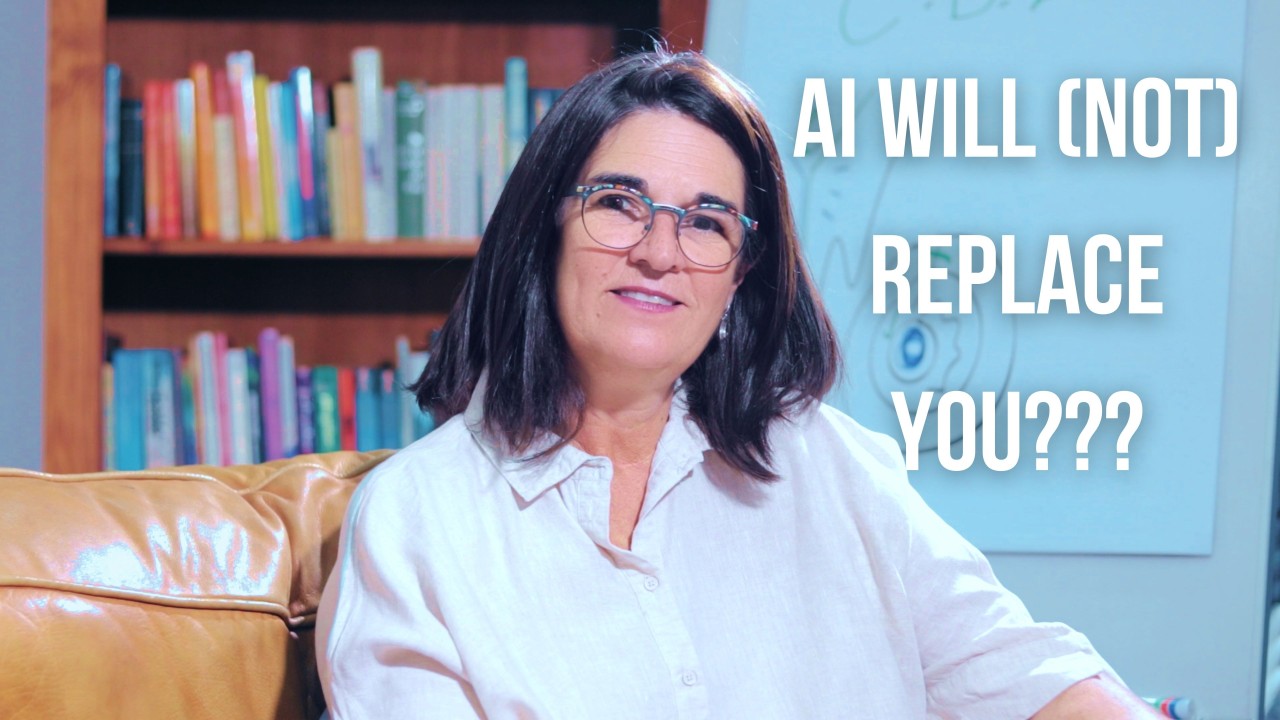
Will AI Replace Humans?
Why Human-Centred Leadership Is the Real Competitive Advantage
As leaders, we are living in a moment of profound acceleration.
Artificial intelligence is no longer a future concept or an abstract idea we debate in boardrooms. It is already embedded in our systems, our workflows, our communication, and our expectations of speed and productivity. Tasks that once took hours now take minutes. Decisions that once required layers of analysis are being supported by algorithms in real time, and yet, beneath the efficiency and innovation, I am noticing something else emerging in organisations.
A quiet fear.
A subtle tension.
A question many people are afraid to ask out loud: Where do I fit in now?
This is why the conversation about AI cannot be reduced to technology alone. The real question is not whether AI will replace humans. The deeper question is what AI is amplifying inside our organisations, and whether our leadership is strong enough to hold what emerges.
AI Is Not the Enemy. Misalignment Is.
AI, in itself, is neither good nor bad. It is a tool. It reflects and magnifies the systems it is placed into.
In healthy environments, AI can create space. It can remove friction. It can free people to focus on higher-level thinking, creativity, strategy, and connection. In unhealthy environments, however, it amplifies pressure, fear, and disconnection.
I have seen leaders introduce AI with the best intentions, believing it will solve inefficiencies or drive performance, only to watch morale drop and resistance quietly grow. Not because people are incapable or unwilling to adapt, but because something fundamental was overlooked.
The emotional culture was not ready.
When technology moves faster than trust, people do not rise to the challenge. They protect themselves. And protection often looks like disengagement, compliance without commitment, or silent withdrawal.
AI does not break teams. Misalignment does. One of the most important things leaders need to understand in this era is that human capacity has not evolved at the same pace as technology. AI can operate 24 hours a day without fatigue. Humans cannot.
When teams are expected to move faster without emotional regulation, clarity, and psychological safety, the nervous system experiences this as a threat. And when people feel threatened, performance does not improve. It contracts.
This is when you begin to see the signs: increased mistakes, decreased initiative, rising defensiveness, and a growing sense of “just getting through the day.” No amount of automation can compensate for a team that feels unseen or unsafe.
Leadership today requires a deep awareness of this reality. The question is no longer, How fast can we go? but rather, How well are our people resourced to go there with us?
Emotional Culture Is the Foundation, Not the Soft Extra
There is a persistent myth in many organisations that emotional culture is secondary to strategy, systems, or technology. In reality, it is the foundation upon which all of those things either succeed or fail. Emotional culture is not about being nice or avoiding difficult conversations. It is about whether people feel safe enough to think, speak, contribute, and adapt. It is about whether leaders can hold pressure without transmitting it unconsciously to their teams.
When AI is introduced into an organisation with a strong emotional culture, it becomes a support. When it is introduced into a culture of fear, it becomes a threat. People do not resist technology. They resist what technology represents when it is poorly integrated: loss of relevance, loss of control, and loss of voice.
A leader who understands this does not dismiss fear. They address it. Human-centered leadership does not mean rejecting AI or clinging to old ways of working. It means placing technology in its rightful role.
AI can support decision-making, but it cannot replace discernment.
AI can automate processes, but it cannot build trust.
AI can analyse data, but it cannot read the emotional climate of a room.
That responsibility still belongs to leaders. The leaders who will thrive in this next chapter are not those who know the most about technology, but those who are deeply attuned to people. They know how to slow the room down when pressure rises. They know how to create clarity when uncertainty increases. They know how to hold space for discomfort without rushing to fix or suppress it. This kind of leadership is not loud. It is grounded. And it is increasingly rare.
When Fear Goes Unaddressed, Performance Suffers
One of the most damaging mistakes leaders make is assuming that silence means alignment. Often, silence is simply fear with nowhere safe to go. When people feel that AI is being used to increase pressure rather than support capacity, they disengage internally long before it shows up in metrics. They stop offering ideas. They stop taking risks. They stop bringing their full intelligence into the room.
This is not a motivation problem. It is a relational one. Leadership requires the courage to ask better questions. What feels unclear right now? Where are you feeling stretched beyond capacity? What support would help you do your best work? These conversations do not slow progress. They prevent breakdown. The most effective organisations I work with are not choosing between humans and AI. They are integrating both with intention.
They use AI to remove unnecessary load, not to extract more from already stretched teams. They are clear about where technology supports the work and where human judgment, creativity, and connection remain essential. Most importantly, they keep coming back to the same question: How is this impacting our people? This question is not sentimental. It is strategic. Because businesses do not fail due to a lack of tools. They fail due to fractured human systems.
The Future of Work Is Relational
As we move forward, the organisations that will truly thrive are those that understand a simple but powerful truth: connection is not a distraction from performance. It is the source of it. AI will continue to evolve. Systems will become faster and more sophisticated. But leadership will always be relational.
The leaders who invest in emotional awareness, psychological safety, and authentic communication are not falling behind. They are building something sustainable.
The future does not belong to AI-driven organisations alone.
It belongs to human-centered leaders who know how to hold complexity without losing connection.
And that is where real progress begins.